
Guilty Gear has been running as a fighting-game franchise since 1998, with roughly 17 entries depending on how spin-offs, updated re-releases, and handheld titles are counted. This page collects the series in roughly chronological order as a reference point for newcomers deciding where to start, and for longtime fans keeping track of the full lineage.
Mainline console entries
- Guilty Gear (1998, arcade/PlayStation) — the original entry, developed by Arc System Works under Daisuke Ishiwatari.
- Guilty Gear X (2000) and Guilty Gear X2 (2002) — the series’ move to arcade hardware with a significantly expanded roster and refined mechanics.
- Guilty Gear XX (2002) and its numerous updates, culminating in Guilty Gear XX Accent Core Plus R — Japanese fighting-game sequels are typically iterative rather than full reboots, and the XX line saw more re-releases than any other era of the series.
- Guilty Gear 2: Overture (2007) — a real-time strategy/action hybrid, the series’ most significant genre departure.
- Guilty Gear Xrd -SIGN- (2014), -REVELATOR- (2015), and Rev 2 (2017) — a return to traditional 2D-style fighting rendered in 3D cel-shaded visuals. Full coverage of the Rev 2 release is available on this site.
- Guilty Gear -Strive- (2021) — the current mainline entry, continuing the Xrd art direction with a further-refined combat system built around the “Wall Break” stage-transition mechanic.
Handheld and spin-off entries
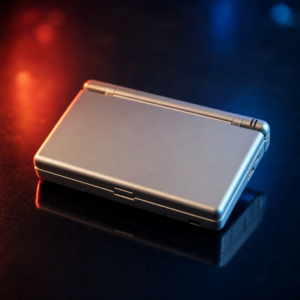
- Guilty Gear Dust Strikers (2006, Nintendo DS) — the series’ Nintendo-handheld debut, built around touch-screen controls and a chibi-style 3D presentation rather than the mainline 2D fighting system. Full coverage of Dust Strikers is available on this site.
- Guilty Gear Judgment (2006, PlayStation Portable) — a side-scrolling beat-’em-up spin-off rather than a traditional 1v1 fighter.
- Guilty Gear Isuka (2003) — an arcade/console entry built around simultaneous multi-character battles rather than the series’ usual 1v1 format.
How the story connects across games
Guilty Gear’s mainline entries share a single, loosely continuous timeline rather than resetting with each release. The original game and its X/XX-era sequels establish a world still recovering from the “Crusades,” a century-long war against magic-corrupted creatures called Gears. Overture functions as a narrative bridge, closing out several plot threads left open by the XX era. The Xrd trilogy is a soft continuation set two years after Overture, and Strive picks the story up directly where Xrd Rev 2 left off. Newcomers who care about story continuity generally get the clearest experience starting at Xrd rather than jumping into the original 1998 game or the X/XX era, both of which lean on context that later games don’t re-explain.
Where to play each era today
Availability varies a lot by era. Guilty Gear -Strive- is the only entry with active online support and rollback netcode, and is sold on PlayStation 4, PlayStation 5, Xbox Series X/S, and Steam. Guilty Gear Xrd Rev 2 remains purchasable on Steam and PlayStation 4, though its online population has thinned considerably since Strive’s release. Guilty Gear XX Accent Core Plus R is available on Steam and is the easiest way to try the 2D-sprite era of the series. The original 1998 game, X, X2, and the two handheld/PSP spin-offs were never given a modern digital re-release and are only playable on original hardware or through the arcade/console versions they originally shipped on.
For background on how the series started and where its visual identity came from, see the origins of Guilty Gear. Fans looking for similar games in the meantime can also check the recommended fighting games for Guilty Gear fans.
Frequently asked questions
How many Guilty Gear games are there?
Counting mainline entries, handheld spin-offs, and the genre-departure title Overture, there are roughly 17 released Guilty Gear games. The count depends on whether individual re-releases and balance updates (like the many XX revisions) are tallied as separate titles or as versions of the same game.
What is the best Guilty Gear game to start with?
Guilty Gear -Strive- is the most accessible entry for newcomers: it’s the only game in the series with a large active online population, rollback netcode, and a simplified input system compared to earlier entries. Players specifically interested in the older 2D-sprite look and deeper execution requirements often start with Guilty Gear XX Accent Core Plus R instead.
Is Guilty Gear -Strive- a direct sequel to Xrd?
Yes. Strive’s story picks up directly after the events of Guilty Gear Xrd Rev 2, continuing the same cast and setting rather than rebooting the series.
Was Guilty Gear Dust Strikers a mainline game?
No. Dust Strikers was a 2006 Nintendo DS spin-off built around touch-screen controls and a chibi 3D art style, distinct from the mainline 2D-fighting entries. It’s covered in more detail on this site’s Dust Strikers page.
Can you still play the older Guilty Gear games online?
Only partially. Guilty Gear -Strive- has the only actively populated online matchmaking today. Xrd Rev 2 and XX Accent Core Plus R both still technically support online play on their Steam/PlayStation versions, but populations are much smaller. The original 1998–2003 era titles were never given online functionality or a modern re-release.

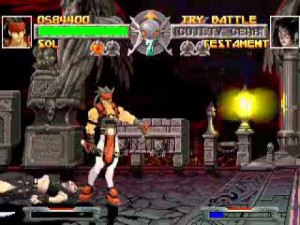 Guilty Gear is a fighting-game franchise with roughly 17 entries to its name, depending on how spin-offs and re-releases are counted. Aside from a four-year gap between 2008 and 2012, the series has produced a new Guilty Gear game in some form almost every year since 1998 — making it one of the longer-running franchises in the genre, even though the original game gave little indication it would spawn a series at all. Fighting games were common in the late 1990s, with Capcom dominating the market through “Marvel Vs. Capcom,” “Rival Schools,” and “Street Fighter,” then in its “Alpha 3” iteration. Daisuke Ishiwatari and his studio, Arc System Works, took a different approach. At the time, most fighting games leaned toward one of two visual styles: Japanese developers followed Capcom’s cartoony-but-grounded “Street Fighter” look, while Western developers followed “Mortal Kombat”‘s hyper-realistic, gorier aesthetic. Ishiwatari combined both styles with a heavy dose of shonen-manga influence. The result was Guilty Gear: The Missing Link.